


Cold pressed daily at Uruli Devachi, Pune  ·  Order on WhatsApp

Nuova  /  Journal

The Nuova Journal

Four pieces on the oil in your kitchen — what cold pressing actually does, how it differs from the refined oil most of us grew up on, what Ayurveda has traditionally said about each oil, and how to cook with them without wasting them.

The benefits of cold pressed oils

Article 01  ·  Fundamentals

The benefits of cold pressed oils

Cold pressing is not a marketing word. It describes a method: the seed is crushed slowly between mechanical surfaces — a wooden ghani or a screw press turning at low speed — and the oil is allowed to run out under pressure alone. No solvent touches it. No external heat is applied. The press does get warm from friction, but a slow press keeps that warmth low, and that single restraint is what everything else follows from.

Heat is efficient. It gets more oil out of the same seed, faster. Cold pressing gives up that yield on purpose — which is why a litre of it costs what it costs.

What survives the press

Vegetable oil is not only fat. Alongside the triglycerides sit small quantities of other things the seed made: tocopherols (the natural vitamin E family), phytosterols, phospholipids, carotenoids and the aromatic compounds that make groundnut oil smell like groundnut. Several of these are heat sensitive, and several are removed on purpose during industrial refining because they cloud the oil, colour it, or shorten its shelf life.

Keep the temperature down and skip the refining, and they stay. That is the whole proposition. It is also why an unrefined oil looks and behaves differently from a refined one:

  • It has colour. Groundnut oil is properly golden, mustard oil is amber, flaxseed oil is deep gold. Refined oils are near colourless because bleaching earth has taken the colour out.
  • It has smell and taste. A cold pressed mustard oil is pungent. A cold pressed sesame oil tastes of sesame. Deodorising, the last stage of refining, is designed to remove exactly this.
  • It can be cloudy, and it can settle. Fine sediment at the bottom of the bottle is seed matter, not spoilage. Cold pressed coconut oil solidifies below about 24 °C — that is the fat behaving normally, not a fault.

The honest trade-offs

Because the natural compounds are still present, cold pressed oils generally smoke at a lower temperature than the refined version of the same seed, and they generally keep for less time. Mustard oil is the exception on smoke point; it stays high even unrefined. Everything else asks for a little more care: a cool dark cupboard, the cap closed, and buying a pack size you will finish in two or three months rather than a drum that sits open for a year.

A word on health claims. Cold pressed oil is still oil — it is roughly nine calories a gram whichever way it was pressed. The sensible case for it is that it is a whole, unadulterated food with its own flavour and its own naturally occurring micronutrients, used in ordinary quantity. Anyone selling you a cure in a bottle is selling you something else.

Why small batches matter

An unrefined oil carries the character of the seed it came from, so the grade of seed shows up in the bottle. At Nuova the seed is A1 grade, the press runs slow, and the batch is small enough that oil reaches you weeks — not seasons — after it was pressed. The cake left behind after pressing still holds protein and fibre, and goes out as cattle and poultry feed rather than waste.

See the seven oils →

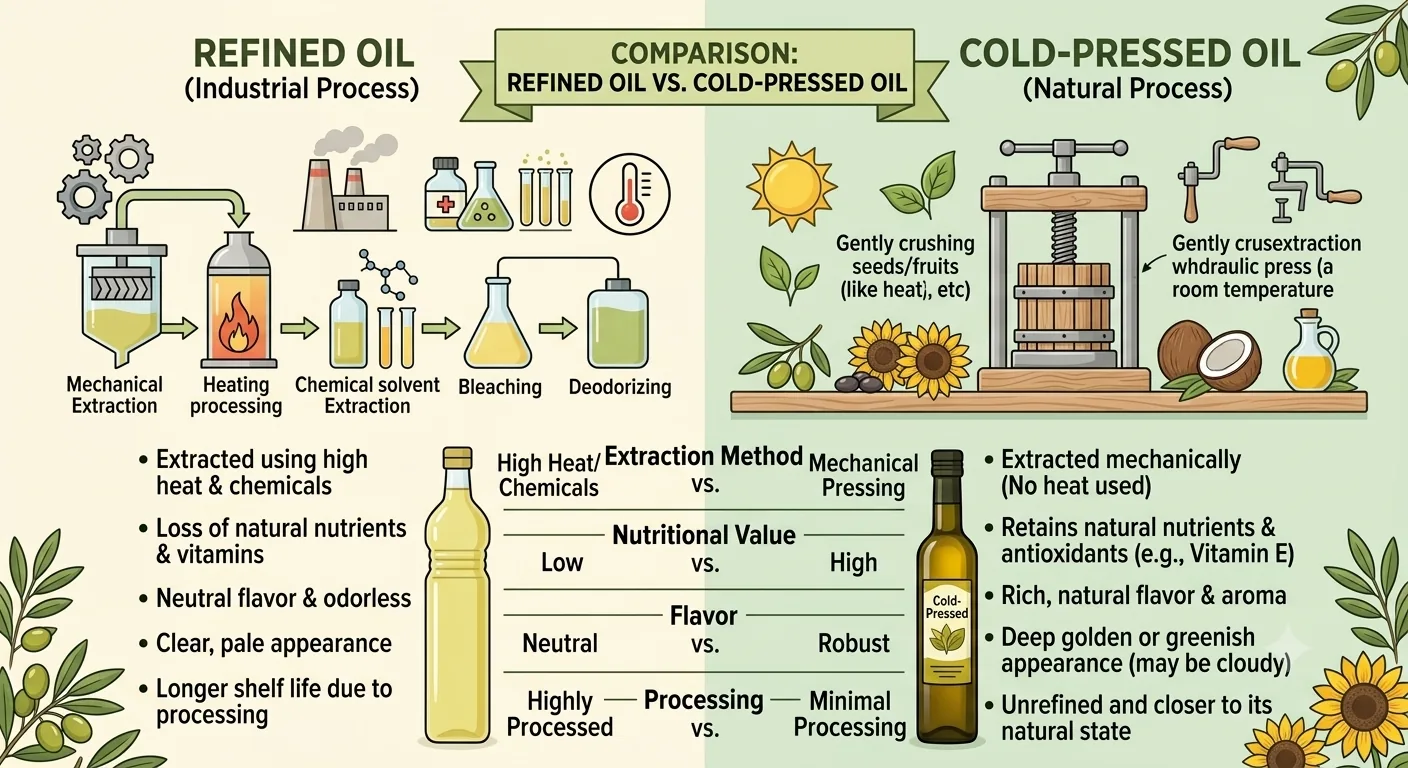
Refined oil and cold pressed oil processes compared side by side

Article 02  ·  Comparison

Refined oil vs cold pressed oil

Most of the oil sold in India is refined, and most of us cooked with it for decades without giving it a thought. It is worth understanding what the word actually means before deciding anything, because the difference between the two bottles is not a matter of grade — they are made by two genuinely different processes.

How refined oil is made

Large-scale oil extraction usually begins with heat and pressure, and then a solvent — commonly food-grade hexane — washes the last of the oil out of the crushed seed. The solvent is afterwards evaporated off. What comes out at that stage is crude oil, and it is not pleasant: gummy, dark, strongly flavoured, acidic. It is then refined, which is a sequence of steps usually abbreviated RBD:

  • Degumming — phospholipids are washed out.
  • Neutralising — alkali removes free fatty acids.
  • Bleaching — absorbent clay strips colour and pigments.
  • Deodorising — steam at high temperature removes odour and taste.

The result is a pale, neutral, stable oil that behaves identically bottle after bottle. That consistency is the point of the whole exercise, and it is a real engineering achievement.

How cold pressed oil is made

Cleaned seed goes into a press. The press turns. Oil comes out, is allowed to settle, and is filtered. That is the entire process. Nothing is added, nothing is washed out, and the yield is meaningfully lower — a good part of the oil stays locked in the cake.

 Refined oilCold pressed oil
ExtractionHeat and pressure, then solvent extractionMechanical pressing only
TemperatureHigh at several stagesKept low throughout
Post-processingDegummed, neutralised, bleached, deodorisedSettled and filtered
Colour & aromaNear colourless, near odourlessNatural colour, distinct aroma and taste
Smoke pointHigher — suits deep fryingLower for most oils (mustard is the exception)
Shelf lifeLonger and very stableShorter; keep cool, dark and closed
Yield from seedHighLower — oil remains in the cake
Cost per litreLowerHigher, and honestly so
Batch to batchIdentical by designVaries a little with the crop

So which is better?

They are better at different things, and it is worth saying so plainly. If you are deep frying a large quantity of food at high temperature, a refined oil with a high smoke point is the more suitable and the more economical choice. If you are stocking a kitchen where a bottle may sit for many months, refined oil will hold up longer.

Cold pressed oil is worth the money when you want the seed's own flavour and its naturally occurring compounds on the plate — and when you would rather your oil had been through a press than through a solvent.

Many households end up keeping both: a refined oil for the occasional deep fry, and cold pressed oil for everyday cooking, tempering, dressing and finishing, where flavour is the whole point. There is nothing inconsistent about that.

One caution about labels. “Filtered”, “wood pressed”, “कच्ची घाणी” and “cold pressed” are used loosely in the market, and some of them are used on oil that has in fact been heated. The things worth checking are the FSSAI licence number, the pressing date and whether the seller can tell you where the seed came from. Nuova’s FSSAI licence is 11524083000635, and the press is at Uruli Devachi, Pune — you are welcome to come and see it.

A traditional wooden ghani press with Ayurvedic herbs and oils

Article 03  ·  Tradition

What Ayurveda says about each oil

Ayurveda treats oil — स्नेह, sneha — as one of its central substances, taken internally and applied externally in abhyanga, the daily self-massage. Oils are read by quality rather than by nutrient: whether a substance is warming or cooling, heavy or light, moistening or drying, and therefore which of the three doshas — Vata, Pitta, Kapha — it settles or stirs up.

The general rule is simple. Vata, being dry, light and cold, is calmed by heavy warming oils. Pitta, being hot and sharp, is calmed by cooling oils. Kapha, being heavy, cool and damp, is calmed by light heating oils and aggravated by rich ones.

Please read this as tradition, not as medicine. What follows is the classical Ayurvedic reading of these oils, offered because it is interesting and because it is how many Indian kitchens have always chosen between them. It is not diagnosis or treatment, and it should not replace advice from a doctor or a qualified Ayurvedic practitioner — particularly if you are pregnant, taking medication, or managing any condition.

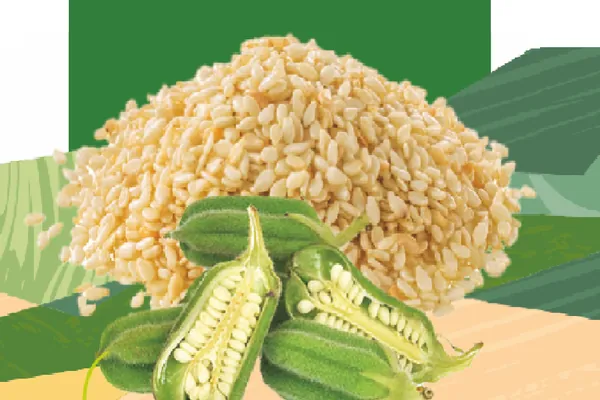
Sesame seed

Sesame oil

तिल तैल  ·  tila taila

Balances Vata Warming

The classical oil of Ayurveda, and the reference point for all the others — the Sanskrit word for oil itself, taila, comes from tila, sesame. It is read as heavy, warming and grounding, which makes it the standard choice for Vata: dryness, restlessness, cold hands, the tail end of winter. It is the traditional oil for abhyanga and for kavala, oil pulling. Being warming, it is used more sparingly in the hot months and by those of strong Pitta constitution.

Coconut

Coconut oil

नारिकेल तैल  ·  narikela taila

Balances Pitta Cooling

The cooling oil, and the one the whole southern coast built its cooking on. Ayurveda reads it as sweet, heavy and distinctly cooling, which is why it is the summer oil, the oil for hot climates, and the traditional choice for scalp and skin when there is heat and irritation. Its heaviness means it is used more moderately where Kapha is already high.

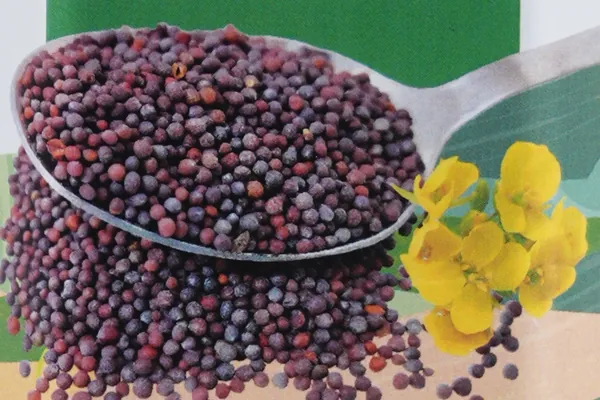
Mustard seed

Mustard oil

सर्षप तैल  ·  sarshapa taila

Balances Kapha Strongly heating

Sharp, pungent and the most heating of the group — which is exactly why it belongs to the cold, damp, Kapha-prone months and to the north and east of the country, where winter is real. It is used to cut heaviness and stagnation. The same heat means it is traditionally reduced in high summer and by those already running hot.

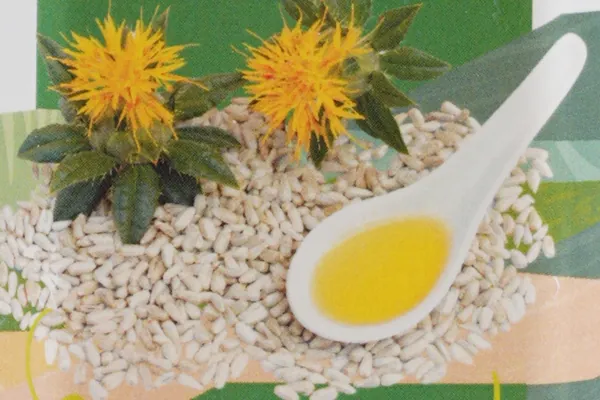
Safflower seed and flower

Safflower oil

कुसुम्भ तैल  ·  kusumbha taila

Balances Kapha Heating & drying

Kusumbha is an old crop in the Deccan and appears in the classical materia medica. It is read as heating and drying, and grouped with mustard as a Kapha oil — light where coconut is heavy. Its drying quality is why it is used with more restraint in Vata conditions, where dryness is already the problem.

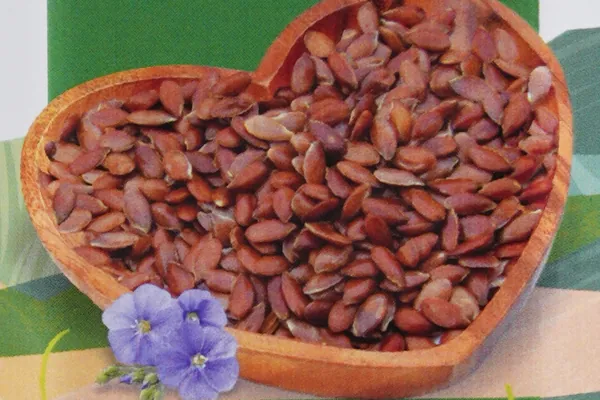
Flaxseed

Flaxseed oil

अतसी तैल  ·  atasi taila

Balances Vata Warming

Atasi is named in the classical texts, though far more often as seed and poultice than as a cooking oil. Where the oil is used it is read as warming and unctuous, and so grouped with the Vata oils. In a modern kitchen its place is settled by something simpler: it is delicate, it does not like heat, and it belongs on the food rather than in the pan.

Sunflower

Sunflower oil

A later arrival — no classical Sanskrit name

Cooling Light

Sunflower is a New World crop and reached India long after the classical texts were written, so it has no place in them. Contemporary Ayurvedic practice reads it by its qualities all the same: cooling and light. That combination puts it with coconut for Pitta, and its lightness makes it acceptable for Kapha too — one of the more neutral oils to keep in a mixed household.

Groundnut

Groundnut oil

A later arrival — no classical Sanskrit name

Warming Heavy

Groundnut too came from the Americas, and although it has become the everyday oil of Maharashtra and Gujarat it appears in no classical text. Read by quality it is sweet, heavy and mildly warming — nourishing and grounding, which places it nearer the Vata oils, and used more moderately where Kapha is high. It stands on its own merits in the kitchen regardless: it takes heat well and it tastes of what it is.

If you are matching an oil to a constitution seriously rather than casually, that is a conversation to have with a qualified practitioner, who will look at far more than which bottle is on the shelf.

Cold pressed mustard oil poured over a salad in a home kitchen

Article 04  ·  Practical

How to use cold pressed oils

The single most useful thing to know about unrefined oil is that it does not all take the same amount of heat. Push a delicate oil too far and you lose the flavour you paid for, and the oil starts to smell acrid. Match the oil to the job and none of that happens.

Heat, honestly

Smoke points for unrefined oils vary with the seed, the crop and the filtration, so treat the figures below as approximate rather than exact. As a rule, the unrefined version of any oil smokes lower than its refined counterpart — mustard being the notable exception.

OilHandlesBest used for
MustardHigh heat (approx. 250 °C)Tempering, frying, pickles, Bengali and north Indian cooking. Heat until it just stops smelling raw, then proceed.
SesameMedium–high (approx. 175 °C)Tadka, stir-fry, sautéing, chutneys, oil pulling, massage.
CoconutMedium–high (approx. 175 °C)South Indian cooking, sautéing, baking, hair and skin.
GroundnutMedium–high (approx. 160–170 °C)Everyday Maharashtrian and Gujarati cooking, bhaji, poha, shallow frying.
SafflowerGentle heat (approx. 105–110 °C)Light sautéing, dressings, finishing. Not for frying.
SunflowerGentle heat (approx. 105–110 °C)Light cooking, dressings, mayonnaise, baking.
FlaxseedNo heatDrizzle over cooked food, salads, dal, curd, smoothies. Never fry in it.

In the kitchen

For the tadka

Groundnut, sesame or mustard. Heat the oil first, then the seeds — mustard seeds should pop within a few seconds, which tells you the oil is ready without a thermometer.

For deep frying

Groundnut or mustard, and do not reuse the oil more than once. If you deep fry often and in quantity, a refined oil is the more sensible choice for that particular job.

For salads and finishing

Flaxseed, safflower or sunflower, added off the heat. This is where an unrefined oil earns its keep, because you actually taste it.

For baking and sweets

Sunflower for a neutral result, coconut where its flavour suits — ladoos, chikki, coconut-based sweets and south Indian preparations.

For massage and hair

Sesame in cold weather, coconut in hot. Warm the oil slightly by standing the bottle in hot water — never on direct flame.

For oil pulling

A spoon of sesame or coconut oil, swished for a few minutes and spat out — not swallowed, and not into the basin, where it will set.

Storing it properly

  • Cool, dark, capped. A closed kitchen cupboard is ideal; beside the stove is the worst place in the house.
  • Light and air age oil faster than time does. Close the bottle straight after pouring.
  • Buy the size you will finish in two to three months. That is precisely why Nuova bottles 100 ml and 200 ml alongside the 1 litre and 5 litre packs.
  • Coconut oil will set solid below about 24 °C. Stand the bottle in warm water; do not microwave it.
  • Flaxseed oil is the most delicate of the seven. Keep it refrigerated once opened and use it within a few weeks.
  • Sediment at the bottom is filtered seed matter. Let it settle and pour off the top, or shake it in — either is fine.

If you are switching over

Unrefined oil tastes of the seed, and after years of neutral refined oil that first bhaji can taste startlingly strong. Most people find a fortnight settles it. If you would rather ease in, start with groundnut or sunflower, which are the mildest of the seven, and leave mustard and flaxseed until your palate has adjusted. Or start with a 200 ml bottle rather than committing to five litres.

How much? Cold pressed or not, oil is energy-dense. Indian dietary guidance generally puts total visible fat for an average adult in the region of 20–30 g a day from all sources combined. Changing the quality of the oil is not a reason to increase the quantity.

See pack sizes and prices →

Pressed this week at Uruli Devachi

Questions about which oil suits you?

Ask the Nuova Message Centre — it will take you through the oils, the pack sizes and the rates, and pass your order straight to us.

Open the Message Centre
Message us